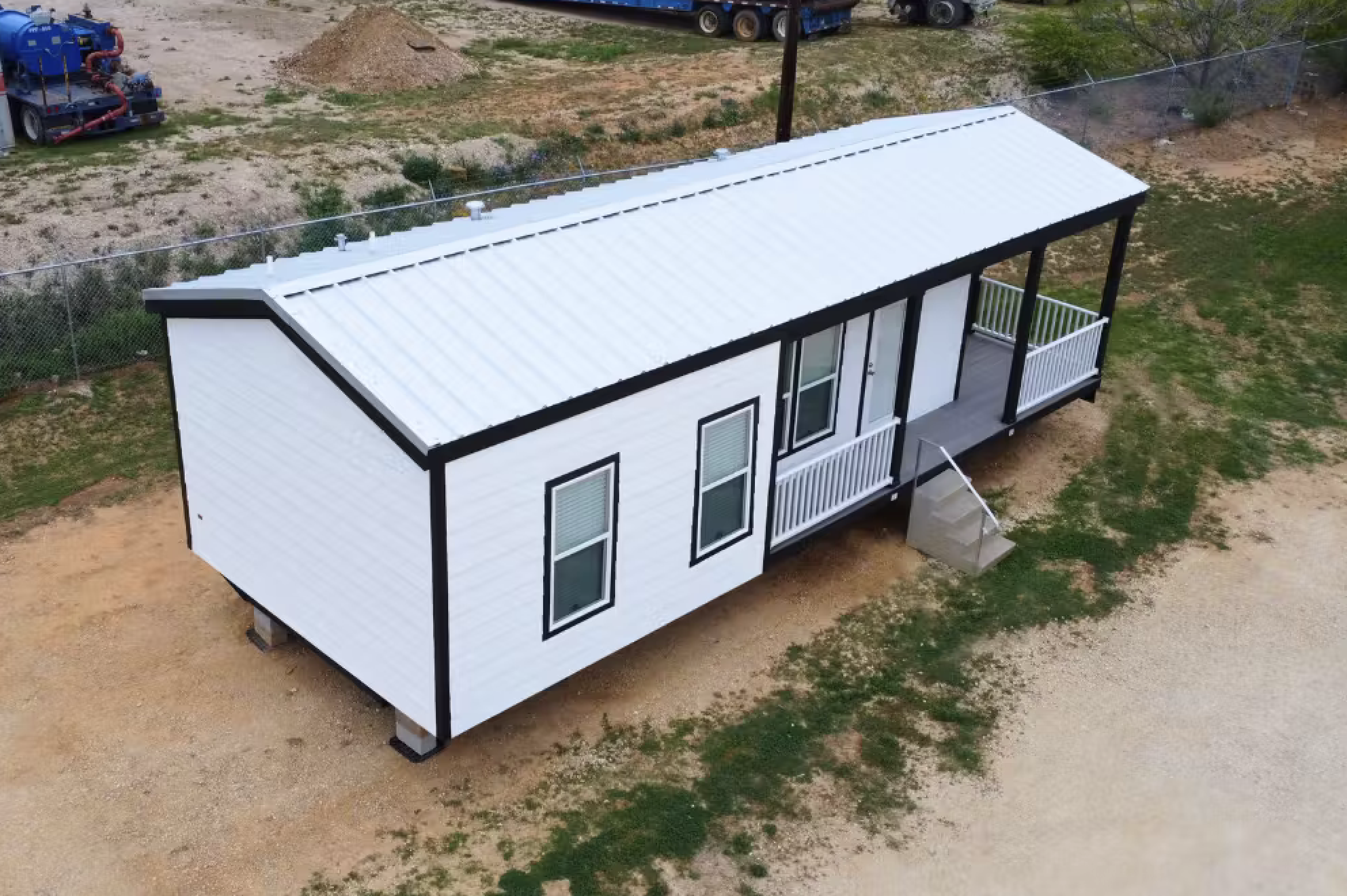
A mobile home roof is one of the most expensive things you’ll ever fix, and also one of the most consequential. A leaky or failing roof quickly becomes rotted ceilings, soaked insulation, mold in the walls, and buckled subfloors. The good news is that most mobile home roof problems don’t require a full tear-off. Many can be solved with a roof coating, a patch kit, or a partial replacement that you can do yourself for a fraction of the cost of hiring a contractor.
This guide breaks down the four main roof options for mobile homes, when each makes sense, what they cost, and which products to buy if you’re going DIY.

Signs Your Mobile Home Roof Needs Attention
The cheapest roof repair is always the one you catch early. Walk the perimeter of your home twice a year, spring and fall, and watch for these warning signs:
- Ceiling stains or discoloration inside. This is the first sign water is getting through.
- Soft or sagging spots on the roof surface when walking it (carefully).
- Visible cracks, blisters, or peeling in the existing roof coating or membrane.
- Rust stains running down the side of the home. This indicates metal roof corrosion.
- Granules in the gutters. If your roof is shingled, granule loss means shingles are failing.
- Seam separation at vents, skylights, or the edges of the roof.
How Long Should Your Mobile Home Roof Last?
Lifespan depends heavily on the material and how well it was installed. A rough guide for mobile home roofing:
- Elastomeric roof coating: 5 to 10 years per application, longer if you maintain it.
- Asphalt shingles: 15 to 25 years depending on grade.
- EPDM or TPO rubber membrane: 20 to 30 years.
- Metal roof overlay: 40 to 60 years.
Keep in mind these are ballpark numbers. A metal roof with bad flashing will leak at year 10. An elastomeric coating applied in cold weather or without a primer might peel in 18 months. Installation quality matters more than material choice for most roofs.
The Four Mobile Home Roof Options (And What Each Costs)
1. Roof Coating (Cheapest, 5 to 10 Year Life)
A liquid-applied elastomeric or acrylic coating is by far the cheapest way to extend the life of an existing mobile home roof. Expect $0.50 to $4.50 per square foot in materials. A single-wide can often be recoated for $250 to $800 in DIY materials. Best for metal roofs with light surface rust, rubber roofs starting to chalk, or any roof without structural damage.
2. EPDM or TPO Rubber Membrane ($2,000 to $9,000)
A single-ply rubber membrane installed over the existing roof. EPDM lasts 20 to 30 years, TPO is similar but more reflective. Installed cost is $4 to $10 per square foot. Best for homes with an old tar-and-gravel or leaking metal roof where you want a fresh, long-lasting surface.
3. Metal Roof Overlay ($3,000 to $10,000+)
New metal panels installed directly over the existing roof. Lasts 40 to 60 years with minimal maintenance. Installed cost is $7.50 to $12 per square foot. Best for owners planning to stay in the home long-term who want a near-permanent solution.
4. Asphalt Shingle Replacement ($1,500 to $10,000)
Full tear-off and re-shingle. Lasts 15 to 25 years depending on shingle grade. Installed cost is $3 to $5 per square foot. Best for homes with pitched roofs where the existing shingles are widely failing.
DIY vs. Hire a Pro: How to Decide
Roof coatings are the most DIY-friendly project. If you can paint a deck, you can apply a roof coating. Membrane, metal, and shingle replacements are harder. They involve working at heights, manipulating large material sheets, and getting edge flashing right. For most homeowners, a DIY coating and a hired installer for membrane/metal/shingle is the best split.
One universal rule: never cover existing moisture damage. If your roof is leaking now, you must find and fix the leak point before applying any new coating or overlay. Sealing moisture in guarantees mold and rot underneath.
Mobile Home Roof Products on Amazon
As an Amazon Associate, TinyRoam earns from qualifying purchases. The links below are affiliate links.
Elastomeric Roof Coatings (5-Gallon Pails): The workhorse for DIY mobile home roof recoating. Henry Tropi-Cool, Gaco, and Liquid Rubber are the most-reviewed brands. All white, all reflective, 200 to 400 sq ft per pail. Browse elastomeric roof coatings on Amazon →
EPDM Rubber Roof Repair Kits: For patching existing rubber roofs. Dicor, EternaBond, and Geocel dominate. See EPDM repair kits on Amazon →
EternaBond Roof Seam Tape: Single most useful product for mobile home roof repair. Stops active leaks instantly. Every owner should have a roll on hand. Browse roof seam tape on Amazon →
Long-Nap Roller Kits with Extension Pole: A dedicated roof coating roller with 9″ nap and a 6-ft extension pole makes the job manageable. See roller kits on Amazon →
Acrylic Roof Primer: Skipping primer is the #1 reason DIY roof coatings fail. A gallon runs about $40 and extends your coating life by years. Browse roof primers on Amazon →
When You Shouldn’t DIY Your Roof
DIY is great for coatings, patches, and light repair work. It’s not great for every situation. Skip the DIY attempt and call a pro if any of these are true:
- The roof is steep enough that you’d need safety harnesses or staging. A fall from even a single-wide roof can be serious.
- You see large sagging areas, which often means rotted decking or a structural issue.
- You have no ground-level access to the roof edge, for example a raised porch blocking a ladder.
- The damage extends into the roof cavity, including soaked insulation or visible mold.
- You’re not comfortable walking on the material. Older metal roofs in particular can have weak spots you can’t see.
A good local roofer will usually give a free inspection. Worst case, you spend nothing and learn whether you’re looking at a coating job or a full replacement.
Step-by-Step: DIY Mobile Home Roof Coating
- Inspect and patch. Walk the roof. Patch any cracks, seam gaps, or holes with a roof patch compound and reinforcing fabric.
- Clean thoroughly. Pressure-wash or scrub with a roof cleaner. The coating will only bond to a clean, dry surface.
- Prime if required. Most quality coatings recommend a primer on rusty metal or chalky rubber.
- Apply first coat. Use a long-nap roller with a pole extension. Typical coverage is 50 to 100 sq ft per gallon per coat.
- Apply second coat 24 hours later in the perpendicular direction for even coverage.
- Inspect and seal seams around vents, AC unit, and edges with a brush.
Timing and Temperature Matter
Most elastomeric coatings need several dry days and temperatures above 50°F to cure properly. Check the label, some products list a minimum of 60°F. Applying in the wrong conditions is one of the most common reasons coatings fail early.
Late spring and early fall are usually the sweet spot in most climates. You want overnight temperatures that stay warm enough for cure, no rain in the forecast for at least 48 hours after application, and ideally low humidity. If you’re in the south, avoid midsummer when the roof surface itself gets too hot to roll smoothly.
The Bottom Line
For most mobile home owners, the right answer is a DIY roof coating every 5 to 10 years, plus spot-patching with seam tape whenever a leak develops. That’s the cheapest, most sustainable path, and it keeps you out of the $5K+ full-replacement bucket until the roof structure itself is compromised.